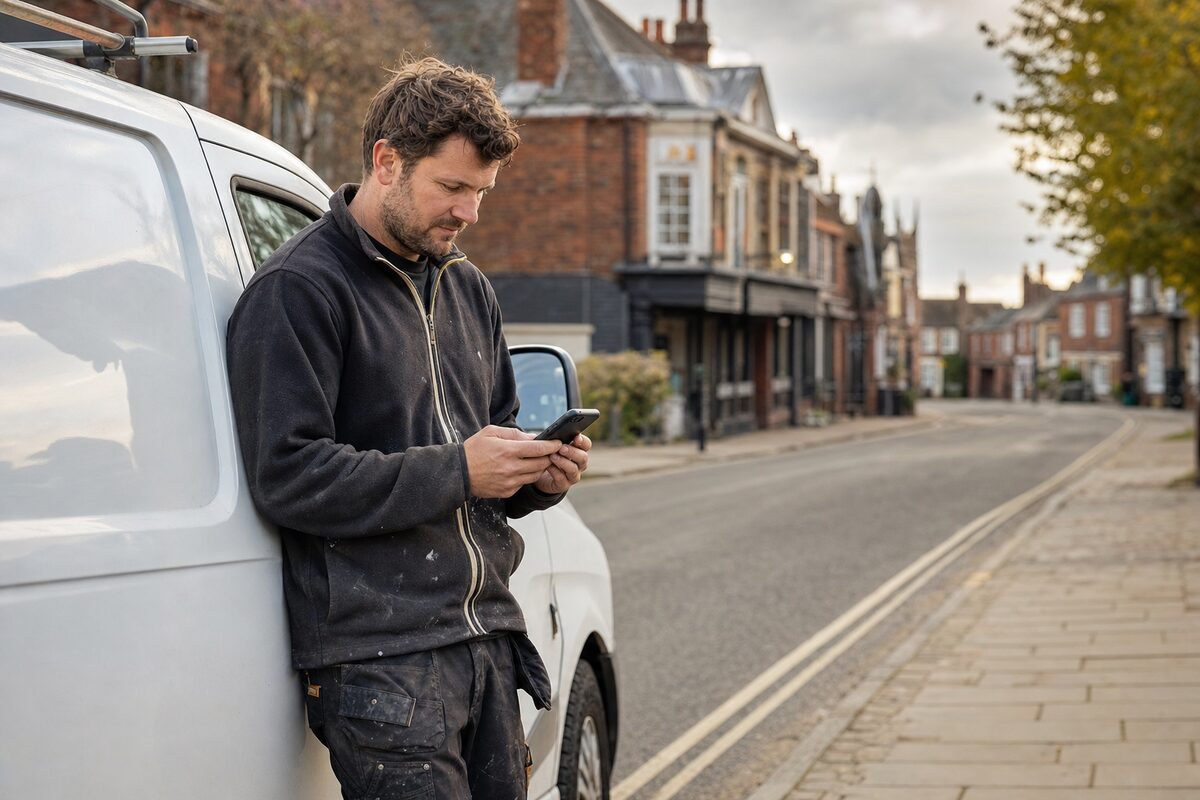
A plumber in a village outside Tenterden once told me he'd spent £400 on a Facebook ad campaign and got two enquiries. His website was three pages, took nine seconds to load on a phone, and his phone number wasn't visible unless you scrolled to the very bottom. The ads weren't the problem. The website was. The ads just sent people there faster to discover it wasn't working.
This is more common than you'd think. And the fix is usually far less dramatic — and far less expensive — than most people expect.
Does a tiny business actually need a website?
Short answer: probably yes, but not for the reason most people assume.
You don't need a website to look "professional" in some vague, abstract sense. You need one because when someone searches for what you do in your area, something has to show up. If it isn't your website, it's your competitor's. Or a directory listing you have no control over. Or nothing at all, in which case the customer calls the person they found instead of you.
A Facebook page helps. A Google Business profile helps more. But a website is the one thing you actually own and control — and it works at midnight on a Sunday when you're not available to answer the phone.
What actually makes a website bring in enquiries
It's not the design. Well — it's not only the design. A clean, attractive website that nobody can find is still a website that brings in no enquiries.
Here's what genuinely moves the needle:
- Speed. If your site takes more than three seconds to load on a mobile phone, a large chunk of visitors will leave before they've read a single word. Google knows this too, and penalises slow sites in its rankings.
- A clear answer to "what do you do and where?" Within five seconds of arriving, a visitor should know exactly what you offer, where you're based, and how to contact you. If they have to hunt for any of those things, most won't bother.
- Your phone number, visible and clickable. On mobile — which is where most of your visitors will come from — people want to tap a number and ring. If they have to copy it out manually, some will give up. Make it a proper clickable link.
- Trust signals. Real photos, real reviews, a physical address, a name. People book tradespeople and local services based on trust. Generic stock photos of smiling strangers do surprisingly little to build it.
- A proper contact form or clear call to action. Tell people what to do next. "Call us for a free quote" or "Fill in the form and we'll get back to you today" is specific and actionable. "Get in touch" on its own is not.
Why your site might not show up on Google at all
This is the question we hear most often. Someone had a website built, it went live, and then... silence. No calls, no enquiries, no sign that Google has any idea it exists.
There are a handful of common culprits:
- Google hasn't indexed it yet — or was never told about it. New sites don't appear automatically. You need to submit the site to Google Search Console so it knows to crawl it.
- The site doesn't mention the right words. If you're a carpet fitter in Cranbrook, your website needs to actually say "carpet fitting in Cranbrook" somewhere — preferably in a heading and in the page copy. This sounds obvious, but a surprising number of sites are built to look good rather than to be found.
- There are no other sites linking to it. Google partly judges authority by how many credible sites point to yours. Local directories, your trade association, your suppliers — getting listed on a handful of these makes a real difference, especially early on.
- Your Google Business Profile is incomplete or unverified. This is a free listing that appears in map searches — "plumber near me" and so on. If yours is unclaimed, out of date, or missing key information, you're invisible in those results.
- The site isn't mobile-friendly. Since 2019, Google has primarily ranked sites based on how they perform on mobile. A site that only looks good on a desktop computer is effectively being marked down in the rankings, even for people searching on a laptop.
Mobile-friendliness: more important than most people realise
Pull up your website on your phone right now. Can you read the text without zooming in? Is the menu easy to tap? Does the page fit the screen without sideways scrolling? Can you tap your phone number to call?
If the answer to any of those is no, you're losing customers. Not in some theoretical future sense — today, right now, every time someone searches for what you do on their phone and your site makes it awkward to find out more.
More than 60% of local searches happen on a mobile device. For some trades and service businesses it's even higher. A site that works beautifully on a desktop but is fiddly on a phone is not a website that's doing its job.
What to look for when choosing someone to build your site
A few practical things worth checking before you commit:
- Can you see examples of their previous work? Look at those sites on your phone as well as your computer.
- Do they handle the basics — Google submission, mobile layout, fast loading — as standard, or are those extras?
- Who owns the site when it's built? Some agencies retain control of the files or the domain, which makes it very difficult to move elsewhere later. You should own your domain name in your own account.
- What happens after launch? A website needs occasional updates, security patches and sometimes content changes. Find out what support looks like after the build is finished.
- Are they local? Not essential, but a local builder who understands your area, your likely customers and the specific searches people use nearby can make a real difference to how well the site performs.
If you're a small business in Kent and you've been putting this off because it feels expensive or complicated, it doesn't have to be either. We build and host websites for local businesses from £299 or £19.99 a month — practical, fast, mobile-friendly sites aimed at getting you found and getting you calls, not just giving you something to point people at. You can find out more about our web design service in Tenterden and across Kent.
The plumber I mentioned at the start? He now gets around eight enquiries a week through his website. He stopped running Facebook ads entirely. The website does the work for him — including, yes, at midnight on a Sunday.