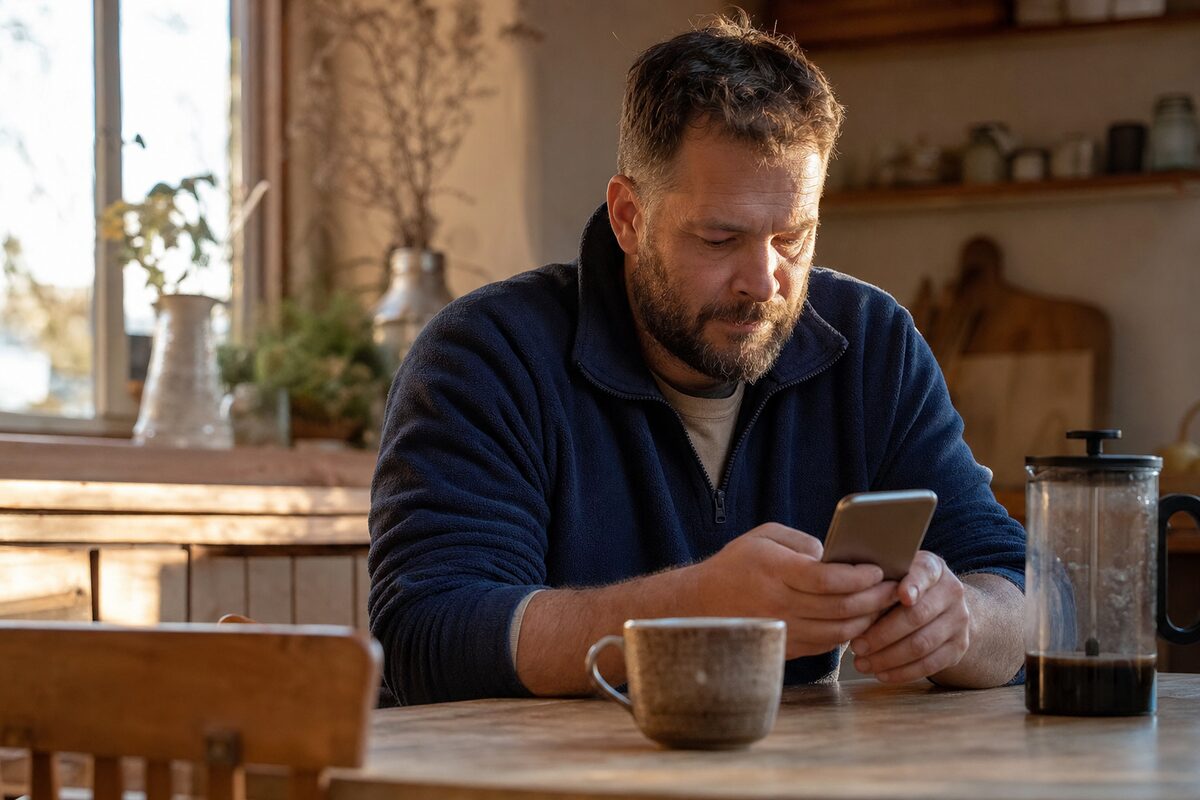
A plumber in Tenterden told me something that stuck. He said a customer had rung him at 7:45 on a Monday morning because a pipe had burst overnight. She'd Googled "emergency plumber Tenterden" on her phone from the kitchen floor, found his website, and called the first number she saw. He got the job. His closest competitor — who'd been trading longer — had a website that hadn't been updated since 2016 and didn't even mention the word "emergency."
That's the gap a good local website closes. Not in some abstract, long-term marketing sense — but in the very practical sense of whether a stranger in a hurry decides to call you or scroll past you.
Does a Small Business Actually Need a Website?
It's a fair question, especially when social media is free and plenty of sole traders get by on Facebook and word of mouth. But there's a meaningful difference between having an online presence and having a website that works for you.
Facebook pages don't rank well in Google searches. Instagram can change its algorithm tomorrow. If your only presence is on a platform you don't control, you're building on rented land. A website is yours — your address, your words, your phone number, visible to anyone searching at any hour.
More importantly, a lot of customers — especially those over 40, and especially for anything involving trust (a tradesperson coming into their home, a professional handling their money) — use a website to check you're legitimate before they ring. No website can quietly cost you enquiries you never even knew you were losing.
Why Most Local Websites Don't Bring In Enquiries
Here's the honest truth: most small business websites fail for one of a handful of very predictable reasons. None of them are mysterious.
- Google can't find them. If your site doesn't mention the town or area you cover, Google has no reason to show it to people nearby. "Gardening services" and "gardening services in Cranbrook and Tenterden" are completely different things as far as search engines are concerned.
- They don't answer the obvious question fast enough. Visitors decide within a few seconds whether they're in the right place. If it's not immediately obvious what you do and where you do it, most people leave.
- They look broken on a phone. More than half of all local searches happen on mobile. A site that's hard to read or navigate on a phone is quietly turning people away constantly.
- There's no reason to get in touch. No clear phone number. No contact form. No hours. No sense of what the next step is. People won't hunt for a way to contact you — they'll just find someone else.
- They haven't been touched in years. An unchanged website signals — fairly or not — that the business may not be active. Fresh content, even small updates, tells Google and visitors alike that someone's home.
What Actually Makes Google Show Your Site to Local People
You don't need to understand the inner workings of search algorithms to get this right. Local SEO — getting found by people near you — comes down to a few straightforward things.
First, your Google Business Profile matters enormously. It's the box that appears on the right-hand side of search results with your address, hours, photos and reviews. It's free, and if you haven't claimed and filled it in properly, you're invisible in a significant chunk of local searches. This is completely separate from your website, and both work better when they work together.
Second, your website needs to say, in plain language, what you do and where you do it. Every page should make it obvious. A heating engineer covering the Weald of Kent should have those words on the site — not because it's clever SEO trickery, but because it's the honest answer to what someone is typing into Google.
Third, reviews. Google takes them seriously, and so do your potential customers. Five genuine Google reviews from happy clients will do more for your local visibility than most things you could pay a marketing agency for.
Mobile-Friendliness: Not Optional Any More
Google officially uses the mobile version of your website to decide how to rank it — not the desktop version. This has been the case for several years now, but a surprising number of small business sites were built before that shift and have never been updated.
Testing is simple: pull up your website on your own phone. Can you read it without zooming in? Is the phone number a tap-to-call link? Does the menu work with a thumb? If any of that feels clunky, your visitors are experiencing the same friction — and leaving.
A modern website built properly will handle this automatically, adjusting its layout depending on the screen size. It's not a luxury feature. It's the baseline.
What to Look for When Someone Builds Your Site
If you're thinking about getting a website built or updating an existing one, a few things are worth asking about before you commit:
- Will it be mobile-friendly by default? Any reputable builder will say yes. If there's any hesitation, walk away.
- Who hosts it, and what happens if you want to leave? You should own your own domain name. Some builders make it hard to take your site elsewhere — ask about this upfront.
- Will it load quickly? Slow websites lose visitors and rank poorly. Ask if they optimise images and use fast hosting.
- Do they understand local search? A website that looks nice but doesn't show up for searches in your area is a missed opportunity. Ask how they handle local SEO as part of the build.
- Can you make basic changes yourself? Or will you be locked into paying for every tiny update? Know this before you sign anything.
We build and host websites for local businesses from £299 or £19.99 a month — covering everything from the initial design through to hosting and ongoing support — and we're always happy to have an honest conversation about whether it makes sense for your particular business before you spend a penny. If you'd like to see what's possible for businesses in and around Tenterden or across Kent, take a look.
The Practical Bit: What to Do This Week
You don't need to overhaul everything at once. Here's where to start:
- Search for your own business on Google as if you were a stranger — what comes up, and does it look credible?
- Check your Google Business Profile exists, is claimed, and has your correct hours, phone number and a handful of photos.
- Open your website on your phone and see how it actually feels to use.
- Ask a friend or family member who doesn't know your business to look at your homepage and tell you — in ten seconds — what you do and how to contact you.
Those four steps will tell you more than any audit report. Most of the time, the problems are obvious once you look through the eyes of someone who's never heard of you before.
The businesses that get calls before 8am aren't necessarily the biggest or the longest-established. They're just the ones that made it easy to be found and easy to get in touch. That's entirely achievable, whatever your budget.