A customer came in a while back looking faintly sheepish. She'd accidentally put her coat through the washing machine — and her USB drive had been in the pocket. The drive was a SanDisk Extreme Go. She'd plugged it in, half expecting nothing. Every file was there.
That story stuck with us. It's not a reason on its own to buy a piece of kit, but it is a decent illustration of what separates a thoughtfully built product from the cheap anonymous sticks you find in a bowl by the till at a service station. This review is about the SanDisk Extreme Go — who it suits, what it does well, where it falls short, and whether it's worth your £49.
What Is It, Exactly?
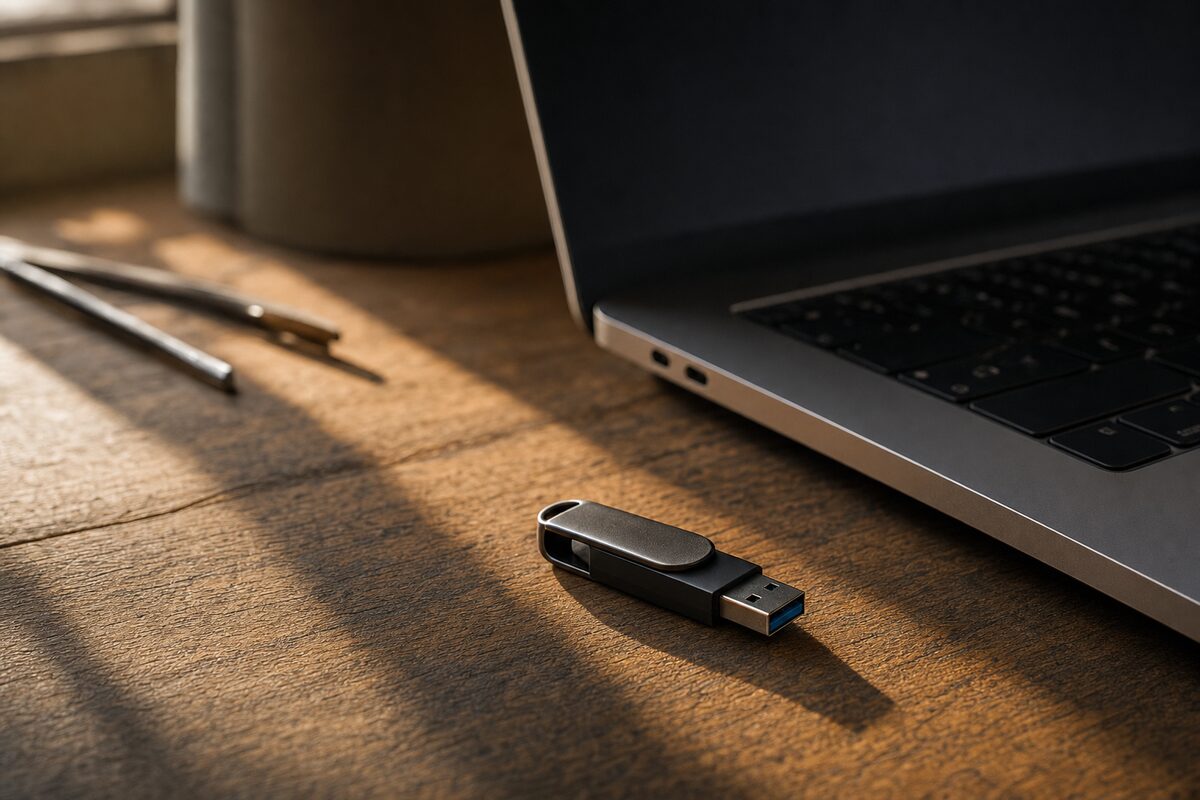
The SanDisk Extreme Go is a USB 3.2 flash drive, available in 128 GB and 256 GB sizes. It's about the size of a small plaster — flatter and squatter than most USB sticks — with a retractable connector so there's no fiddly cap to lose. It plugs into any USB-A port on a Windows PC, Mac, or laptop, and it works straight away with no software to install.
SanDisk advertises read speeds of up to 395 MB/s and write speeds of up to 100 MB/s. In practice, real-world speeds are a bit lower than headline figures always are, but it's still meaningfully faster than the average USB stick, which often crawls along at 20–30 MB/s write. If you've ever watched a progress bar inch across the screen while copying a folder of photos, you'll appreciate the difference.
Who Is This Actually For?
This is not a replacement for a proper backup drive — we want to be clear about that up front. If you need to back up your whole computer, a portable hard drive or a dedicated backup solution is the right tool. USB sticks can fail without warning and shouldn't be your only copy of anything important.
That said, the Extreme Go is genuinely excellent for:
- Carrying work files between a home computer and an office machine — faster and more reliable than emailing yourself large files
- Keeping a working copy of documents you need on the road — presentations, spreadsheets, PDFs
- Quick transfers of large photo or video collections between devices — the speed really does matter here
- A second copy of files you're actively working on alongside a cloud backup, not instead of one
- Handing over files to a client, printer, or colleague without needing an internet connection
Small business owners, photographers, and anyone who works between a laptop and a desktop will get the most out of it. It's also a reasonable option for older family members who want a simple, physical way to keep copies of important documents — no cloud account required, no passwords to forget.
What's Good
The speed is the headline, and it holds up. Copying 10 GB of mixed files — the sort of thing you might do when handing off a project — takes roughly two minutes rather than ten. That doesn't sound like much until you're standing at someone else's desk waiting.
The build quality is noticeably better than budget sticks. It feels solid rather than hollow, and the retractable connector is a small but genuinely useful design choice. The body has a raised rubber texture that stops it sliding off a desk, and the loop at the end fits a keyring or lanyard without much effort.
It's also genuinely compact. It barely protrudes from a laptop's USB port, which matters if you're moving around with it plugged in — a stick that sticks out three centimetres is an accident waiting to happen.
What's Not So Good
It gets warm during sustained transfers. Not alarmingly so, but noticeable. That's common with fast flash drives, but worth knowing if you're copying very large files regularly.
It's USB-A only. Plenty of modern laptops — particularly MacBooks and thinner Windows machines — have only USB-C ports, which means you'd need an adapter or a hub. That's a minor irritation rather than a dealbreaker, but it does feel like an oversight on a drive that's otherwise trying to be modern and quick. SanDisk does make USB-C versions of other drives in the range if that matters to you.
And — worth repeating — it's not a backup device. Flash storage can fail silently and without warning, and there's no recovery service that can reliably retrieve data from a failed flash chip the way a specialist can sometimes recover data from a failing hard drive. If your only copy of something important lives on a USB stick, that's a risk. Think of this as a fast, portable working drive, not a safe.
Honest Verdict
At around £49 for the 256 GB version, the SanDisk Extreme Go is one of those products where the price feels fair rather than bargain-bin cheap or premium for the sake of it. It does what it says, it does it quickly, and it's built to last rather than fall apart in six months.
It won't replace a proper backup strategy, and it won't replace the peace of mind that comes from having your files in more than one place. But as a fast, reliable, carry-everywhere drive for everyday working life, it's hard to find fault. We keep one in the workshop. The customer who washed hers still uses hers.
If you're looking for more advice on what to buy and what to avoid, our recommended kit page has a short, honest list of the things we actually suggest to customers — no affiliate padding, just what we'd point a friend towards.