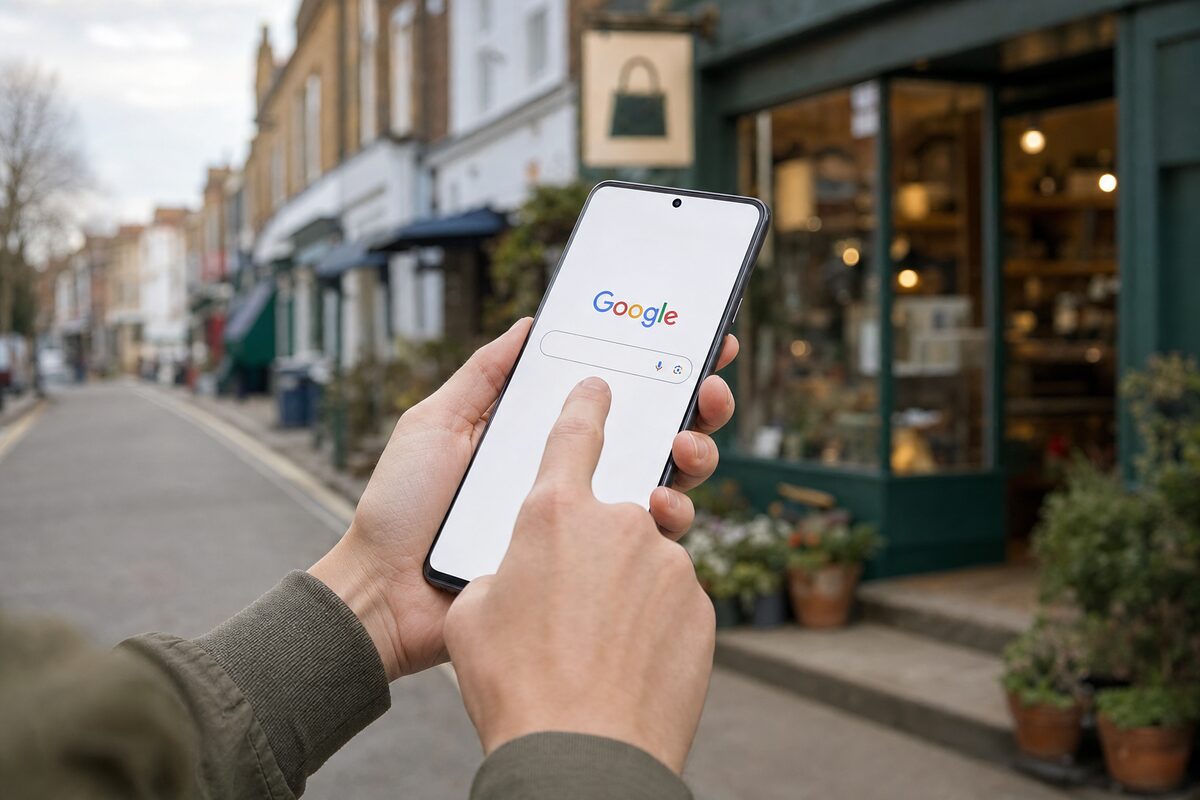
Picture this. Someone moves into a village near you. They need exactly what you offer — let's say a plumber, a dog groomer, an accountant, a curtain-maker. They pull out their phone and type something like "dog groomer near Tenterden" or "accountant Cranbrook." They scroll through the first few results, click one or two, and ring the first person who seems like they know what they're doing.
You never know this happened. You were never in the running. And that person has now booked someone else — possibly for years.
This is not a rare event. For many small local businesses, it happens dozens of times a month. The frustrating part is it's almost never about the quality of your service. It's almost entirely about whether you showed up at all, and what happened when someone clicked through.
Does a tiny business actually need a website?
This comes up a lot. "I get all my work through word of mouth — do I really need a website?" The honest answer: probably yes, even if word of mouth is working well right now.
Here's why. Even customers who hear about you from a friend will Google you before they ring. They want to check you're real, see what you do, get a rough sense of your prices, and form an opinion about whether you're the sort of person they want in their home or working on their business. If they can't find you — or find something outdated and tatty — a surprising number will quietly move on rather than ring a stranger on the strength of someone else's recommendation.
A website doesn't replace word of mouth. It supports it. It's the thing that converts a warm lead into an actual phone call.
What actually makes a website bring in enquiries?
A lot of people assume that having a website is enough. Put up some pages, list your services, add a phone number — job done. But there's a real difference between a website that exists and a website that works.
The websites that genuinely bring in enquiries tend to do a handful of things well:
- They answer the right question immediately. Within five seconds of landing on your site, a visitor should know what you do, where you do it, and roughly who you're for. If they have to hunt around to figure that out, most won't bother.
- They mention the location, clearly and often. "Serving Tenterden, Cranbrook, Headcorn and the surrounding villages" is worth more to your Google rankings than almost anything else on the page. Google needs to understand where you operate.
- They have a real phone number in plain text. Not an image of a number. Not a form as the only contact option. A number someone can tap on their phone and ring immediately.
- They load quickly on a mobile. More than half of all local searches happen on a phone. If your site takes six seconds to load or looks broken on a small screen, most people will hit the back button before they've read a word.
- They include genuine words about what you do. Google can't watch a video or look at a pretty photo. It reads text. Pages with real, specific written content about your services almost always outrank pages that are mostly images and short bullet points.
Why doesn't my site show up on Google?
This is the most common question we hear from local businesses who already have a website. They had one built a few years ago, it looks decent, but nobody ever rings from it. A few common culprits:
Google hasn't properly indexed it. If your site is very new, very thin on content, or was built on a platform that makes it hard for search engines to read the pages, Google may not be showing it to anyone. You can check this yourself by searching site:yourwebaddress.co.uk — if nothing comes back, Google essentially doesn't know your site exists.
It doesn't mention your location clearly enough. A website that says "we offer professional landscaping services" but never says where will not appear when someone searches "landscaper near Tenterden." It sounds obvious, but it's astonishing how many local business websites don't actually name their town or village on their homepage.
Nobody links to it. Google treats links from other websites like votes of confidence. A brand-new website with no links pointing to it starts with very little authority. Getting listed on local directories, your trade association's website, or even a well-placed mention in a local online article can make a real difference over time.
It's not set up on Google Business Profile. This is the free listing that appears on Google Maps and in the little panel on the right when someone searches your business name. If you haven't claimed and filled in your Google Business Profile, you're missing one of the most powerful free tools available to a local business. It's separate from your website, and both matter.
What about mobile-friendliness — does it really matter that much?
Yes. More than almost anything else right now. Google switched to what it calls "mobile-first indexing" several years ago, which means it looks at the mobile version of your site to decide how to rank it — even for people searching on a desktop computer.
If your website was built more than five or six years ago and hasn't been updated since, there's a real chance it doesn't behave well on a phone. Text that's too small to read, buttons too close together to tap, images that break the layout, forms that go off the edge of the screen — all of these will cost you rankings and enquiries.
The simplest test: open your website on your phone right now. Would you stay on it if you'd found it while searching for something? If the answer is no — or even "not really" — that's worth fixing.
What should you actually do?
If you don't have a website yet, get a proper one. Not a free website builder that puts someone else's branding in your URL and limits what you can do. A real, hosted website with your own domain name, built to actually be found.
If you have a website but it isn't working, start by checking the basics: is it showing up in Google at all? Does it mention your location? Does it load properly on a phone? Is your Google Business Profile claimed and filled in with photos, opening hours and a description?
Most of these things don't require a complete rebuild. Sometimes a few targeted changes to an existing site — adding location text, fixing mobile display issues, improving page titles — can make a noticeable difference in a matter of weeks.
If you do need something built from scratch, it doesn't have to be expensive or complicated. A well-built local business website doesn't need to be a work of art — it needs to be clear, fast, findable, and honest about what you do. At Advantec, we build and host websites for local businesses from £299 or £19.99 a month, and the brief is always the same: build something that actually gets you enquiries, not just something that looks nice in a browser.
The customer who just searched for what you offer is real. The question is just whether you were there when they looked.